

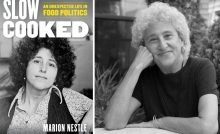
I used to keep a few books at my desk when I was responsible for the grocery department at Whole Foods. Raj Patel’s “Stuffed and Starved” was a fave, particularly because it nailed the economics. A dog-eared copy of “Good Food” by Margaret Wittenberg, who led our Quality Standards team. A used copy of “Welcome To The Monkeyhouse” by Kurt Vonnegut, because the title speaks for itself if you have ever worked retail. And at least 1 or 2 frequently consulted gems by the longstanding NYU Professor Marion Nestle, namely the groundbreaking “Food Politics” and the James Beard Award Winning “What To Eat”. And while I am no longer with Whole Foods, I still have a copy of “What To Eat”.
Professor Nestle has decided to apply her prodigious writing and teaching skills to her own life, and her new memoir, “Slow Cooked” is a delight. It’s safe to say that contemporary food studies would probably not exist without the efforts of Nestle, or it if it did, it would resemble the shallow pop culture dreck of the Food Network. It’s also safe to say that without Nestle applying a laser scalpel analysis to the workings of the food industry, there would have been no “Fast Food Nation”, possibly no “Kitchen Confidential” and definitely no “Omnivore’s Dilemma”, although that influential tome owes as much to Julie Guthman.